Minecraft Legends
Shipped on all major platforms. Built for millions.
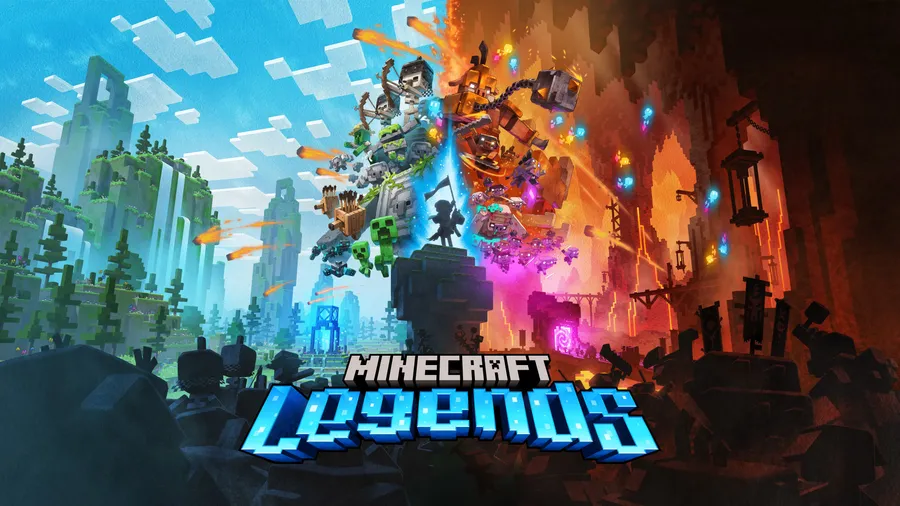
Minecraft Legends is an action-strategy game developed by Mojang Studios and published by Microsoft. Available on Nintendo Switch, PlayStation, Xbox, and PC.
I worked as a Programmer at Blackbird Interactive (Feb 2022 – Mar 2023), contributing to core gameplay systems and client-side features using React and TypeScript within Coherent GameFace.
This is not a student project or a prototype. This shipped. Millions of players, across all platforms, playing code I helped write.
Origin Story
Where the smith learned the craft. Five foundational projects that shaped the path to shipped titles.
Space Fighter
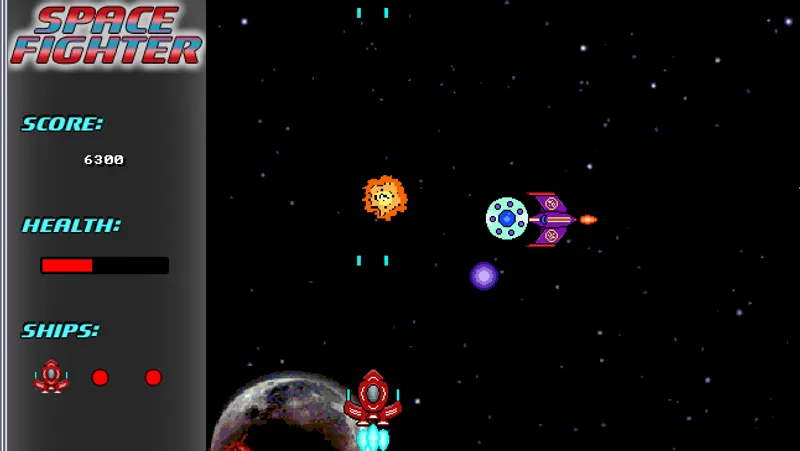
Vector-based arcade shooter built from scratch. Pure trigonometry and collision detection — no engine, just math and a canvas. Enemies spawn in formation waves; player ships have directional thrust physics. The first time a game loop running at 60fps felt like magic.

Pizza Madness
AI-driven enemies with behavior trees. A food-delivery chaos simulator that taught the difference between an entity that moves and one that thinks. Enemies route around obstacles, prioritize targets, and react to player behavior. Frantic by design.
Ant Colony Pathfinding
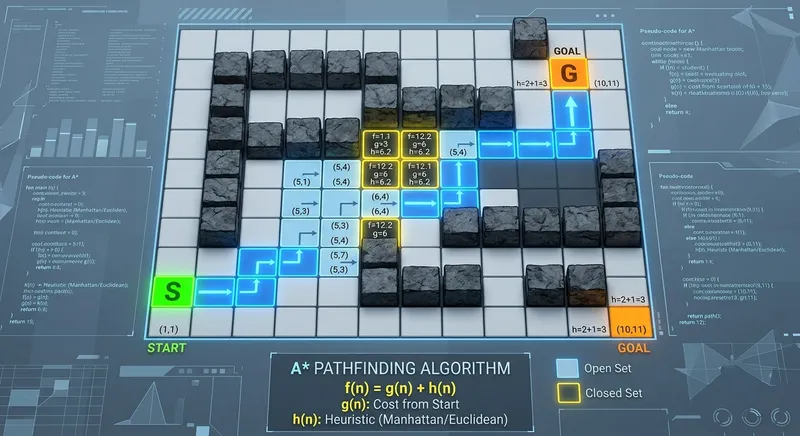
A* algorithm at scale. Fifty-plus agents running simultaneously, each finding optimal routes through a dynamic grid. Emergent swarm behavior — no single ant is smart, but the colony always finds food. A lesson in how intelligence can arise from simple rules applied in parallel.
Connect Four AI
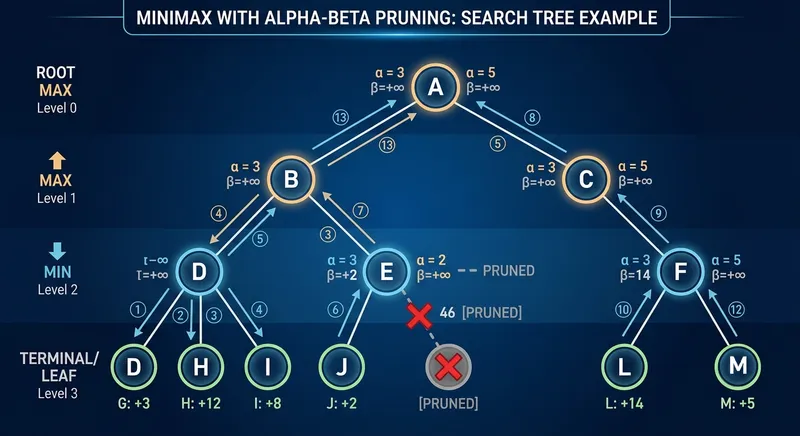
Alpha-beta pruning on a minimax search tree. The AI doesn't just play well — it is genuinely unbeatable at full depth. Watching it block a winning move six turns out felt like the first time code became intelligent. A formative moment in understanding what algorithms can do.
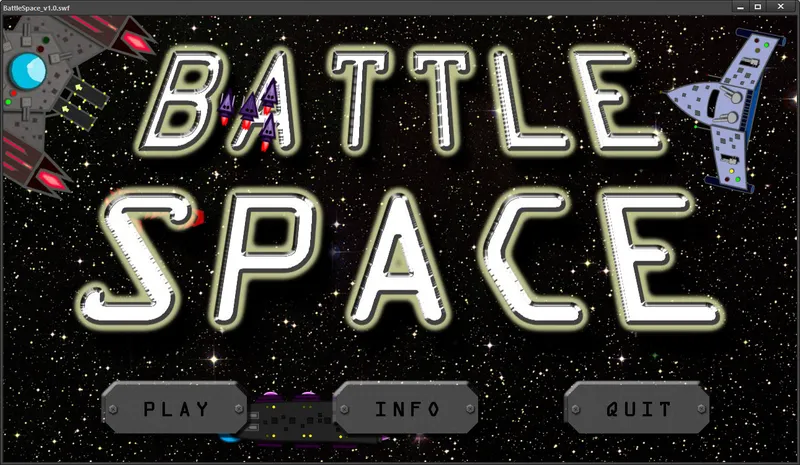
BattleSpace
Flash-era turn-based strategy. Where it all started. The origin point — the project that made it real that games could be built, not just played. Every professional decision since traces back to what was learned making this.
The Player
Not just a maker. A lifelong player. This career exists because of games.
The Timeline
Atari 2600. Not even his own — the neighbor's. Six years old, borrowed controller, and Asteroids running on a TV that weighed more than the console. That was the ignition. Something clicked that never unclicked.
Sega Master System. The first console of his own. Finally. Hang On and Safari Hunt built into the BIOS, no cartridge required. Sega had him from day one and that loyalty held.
Sega Genesis → Sega CD → 32X. Rode the full Sega hardware wave — every peripheral, every add-on, every console revision. Sonic. Mortal Kombat. Night Trap. The FMV era in all its chaotic glory. Meanwhile, Nintendo happened at friends' houses and sleepovers — their hardware was never his, but their games were formative anyway.
PC gaming era. Starcraft. Warcraft III. Diablo II. Age of Empires. The genre explosion happened here — RTSs, dungeon crawlers, and multiplayer that changed how games felt. PC ran alongside everything else from this point forward, never stopping.
OG Xbox. Back to consoles, but Microsoft's way. Halo defined a generation of co-op gaming. Xbox Live in its earliest form. The controller that finally fit like it was designed for human hands.
Switch → Switch 2. After decades of borrowing Nintendo games at friends' houses, finally owning the hardware. Worth the wait. Breath of the Wild. Metroid Dread. The joy of a library that respects the player. And all of it alongside PC — always PC, no platform wars, just more games.
Why This Matters
I became a programmer because of games. Every language I learned was to build interactive systems. Every architecture decision was informed by game design patterns. Every shipped product carries the design philosophy of something that should be fun to interact with.
The Minecraft Legends code exists because a six-year-old played Asteroids at a neighbor's house. That's not just a career path. That's a through-line. The smithy was always going to exist.
